This guide explains how to evaluate Vehicle Availability before committing to a purchase, with an objective overview of how inventory moves, how lead times are managed, and what affects availability across suppliers. It then provides a practical comparison of sourcing options and a step-by-step checklist, including conditions to verify, common risks, and targeted FAQs.
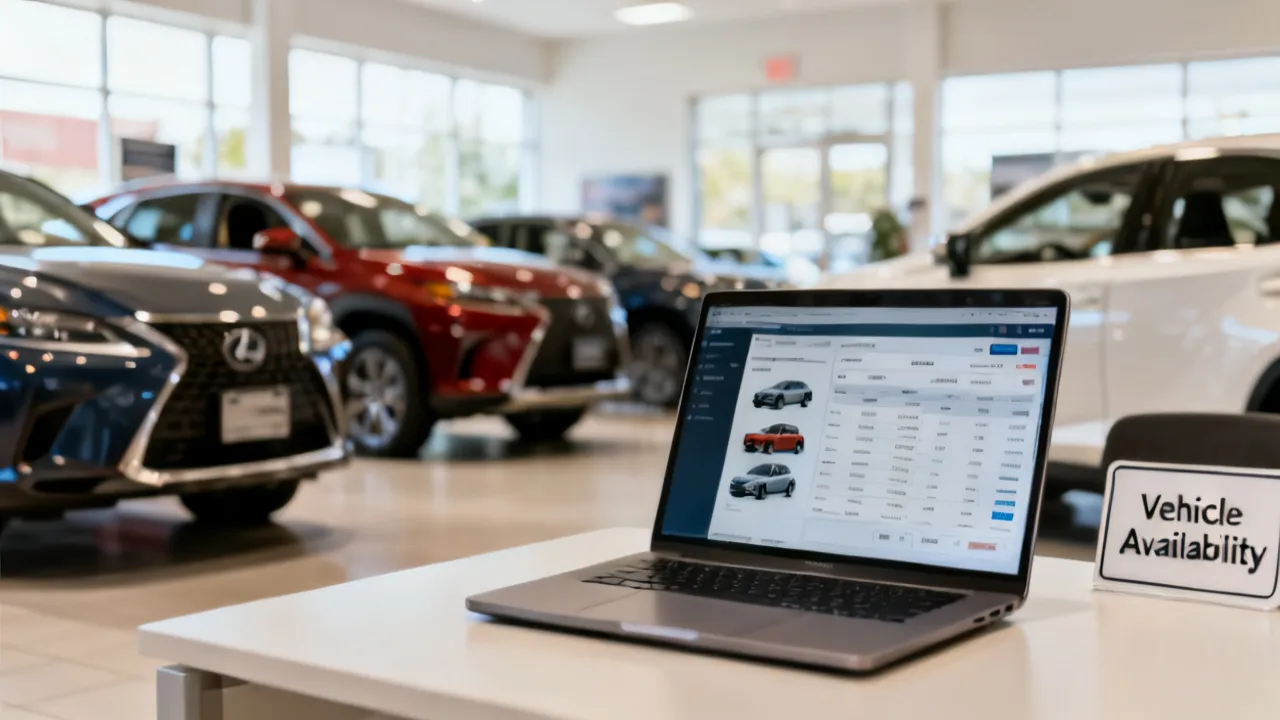
Vehicle Availability is not just about whether a car is “in stock.” For buyers and fleet operators, it’s the practical measure of whether a specific model, trim, and configuration can be obtained within a useful timeframe—through a dealer, an auction channel, a manufacturer allocation, or a supplier-backed sourcing process. This guide is designed to help you assess Vehicle Availability with a disciplined, decision-ready approach: confirm the exact specification, understand lead-time drivers, and validate the supplier’s ability to maintain continuity from order to handover.
From an industry expert’s perspective, the very common failure point in purchasing is ambiguity—when shoppers assume that a listing reflects final readiness. In reality, Vehicle Availability can change quickly due to allocation timing, inbound logistics, regulatory constraints, transport schedules, and the availability of specific options. Your goal is to reduce uncertainty early, so your selection process aligns with the operational timeline you actually need.
Think of Vehicle Availability as a “readiness equation.” A vehicle can technically exist in a supply system yet still be unavailable in the way you need—because it’s not yet inspected, it’s awaiting parts for reconditioning, paperwork is incomplete, the transport network is congested, or the exact configuration you want won’t arrive until the next production wave. The best buyers treat the promise of availability like a contract with measurable milestones rather than a sales tagline.
Vehicle Availability is shaped by several interconnected elements that influence how quickly vehicles can be confirmed, prepared, and delivered. In many markets, demand cycles, seasonal purchasing patterns, and manufacturing schedules can create short windows where certain trims are plentiful and others are scarce. Even when a supplier advertises broad inventory, the buyer still needs to confirm the exact configuration because option packages frequently drive delays.
At a systems level, Vehicle Availability is also affected by:
But those are only the visible drivers. In practice, Vehicle Availability also shifts due to operational bottlenecks that buyers rarely see until it’s too late. For example, even after an order is confirmed, the ability to move the vehicle into the “customer-ready” lane depends on whether inspection capacity is available that week. Similarly, documentation delays can occur because a shipping document is missing a specific detail, a VIN verification step is pending, or a compliance check needs additional proof. Each delay might be small on its own, but together they can push the timeline out by weeks.
As a result, two listings that look similar may represent very different realities—one ready for immediate handover, the other dependent on a future supply batch. Treat Vehicle Availability as a timeline and a specification contract, not a marketing claim.
One practical way to frame this: the buyer cares about time-to-hand-over, not time-to-listing. A vehicle might appear online long before it can actually be transferred to you. Conversely, a vehicle may not show obvious “availability” because it’s already reserved internally, but it might still become available quickly through the right channel. The discipline is to separate your decision criteria from the supplier’s marketing presentation.
In dealership operations and supplier-managed sourcing, Vehicle Availability is top evaluated as a chain of dependencies: confirmation of the vehicle’s identity and specification, documentation readiness, transport scheduling, inspection and reconditioning, final compliance, and handover. If any link is weak, the buyer experiences delays or substitutions.
Practically, buyers should distinguish between:
When your timeline is tight—such as for business fleets, seasonal needs, or replacement cycles—ordered-to-spec sourcing can still work, but only if the supplier provides clear milestones and contingencies. Your due diligence should focus on whether Vehicle Availability is supported by operational controls rather than optimistic timelines.
An expert lens also recognizes that “availability” is not a single date; it’s a progression through operational stages. Consider an example: a supplier may say “available within two weeks.” That might be true in the sense that the vehicle is expected to arrive at a yard within two weeks, but it could still take an additional week to complete inspection and reconditioning, plus another few days to handle compliance paperwork and final customer scheduling. The chain of custody matters, and the buyer must ask what “within two weeks” actually means in terms of stage gates.
When you buy for fleets, this chain-of-dependencies perspective becomes even more important. Fleet managers often have downstream commitments—routes, drivers, contracts, insurance start dates, and replacement planning. A delay in handover can trigger additional labor costs, overtime, rental substitution expenses, and disruptions to service-level commitments. Therefore, fleet buyers should treat Vehicle Availability as a supply-chain deliverable with defined checkpoints rather than a hopeful forecast.
Price is often used as a proxy for urgency or scarcity. However, it’s not a substitute for verification. A lower advertised price may reflect an older listing, pending reconditioning, incomplete documentation, or a configuration mismatch risk. Conversely, a higher price may include prep work, warranty coverage, or confirmed inbound readiness.
To keep your decision objective:
In many purchasing processes, the phrase “best price” can hide the difference between vehicles that are actually ready today and vehicles that are only promised for later. For instance, a discounted vehicle might be “available” in the listing sense but still require body repairs, tire replacement, battery service, or safety-system recalibration before it can be delivered. If the supplier doesn’t provide a breakdown of reconditioning scope and estimated completion time, the buyer may end up financing delays.
There’s also a behavioral pattern worth acknowledging: some buyers interpret a quick response or friendly tone as evidence of reliability. While responsiveness can be a positive signal, it doesn’t replace spec verification and milestone confirmation. The best practice is to use price and communication speed only as initial signals, then rely on structured confirmation steps—VIN verification, documented option confirmation, stage-based timelines, and written readiness criteria.
Industry-wide research on consumer behavior and dealer pricing transparency consistently shows that buyers benefit from structured confirmation processes, because listings and promotional materials may not reflect the full set of readiness steps that occur after the sale begins. For broader context on consumer trust and market transparency, refer to established reporting from organizations such as the Federal Trade Commission (FTC) regarding advertising and consumer disclosures in the automotive context.
Even if your purchase doesn’t operate under the same advertising regimes as certain consumer promotions, the principle holds: if the supplier cannot explain what “availability” includes and what it excludes, you should assume the seller is describing the easy-to-sell part of the supply chain, not the complete chain from order to handover.
Vehicle Availability depends on the supplier network behind the scenes. In many supply ecosystems, “availability” is influenced by relationships between dealers, wholesalers, transport providers, and manufacturer allocation teams. A key expert insight is to identify who has the very control over the chain—often the party that can confirm identification and milestones, not merely the party that can quote inventory.
Common supplier roles include:
From a risk-management standpoint, you want a supplier who can demonstrate control at each step—particularly around identification, documentation, and readiness for handover. If Vehicle Availability is presented vaguely, request concrete confirmation artifacts: vehicle identification details, confirmation of options, and a timeline that breaks down key stages.
To deepen the practical understanding, it’s useful to define “control” as the ability to change outcomes. Some participants can provide information (“we think it will arrive”), but they cannot change the critical path (“we can’t expedite reconditioning capacity”). Others can actually influence readiness (“we can hold a specific VIN, we can complete inspection on arrival, and we can schedule handover immediately once paperwork is verified”). When you evaluate Vehicle Availability, you are really evaluating control over those critical path tasks.
For example, if a supplier says the vehicle is “confirmed” but cannot provide VIN-level confirmation, you should treat that “confirmation” as a lead claim rather than a deliverable. Likewise, if a supplier can provide VIN but cannot provide paperwork readiness status, the VIN confirmation is only part of the chain. Buyers should ask: who verifies the VIN? Who prepares the paperwork? Who handles title transfer steps? Who confirms reconditioning completion? In a complex network, responsibilities can be spread across parties, and you need to know who is accountable for each link.
In fleet purchases, accountability is even more important because fleet procurement may require internal approvals and documented lead-time planning. If a supplier is part of the chain but not accountable, you can end up with a situation where the fleet’s internal timelines conflict with the supplier’s operational reality. The solution is to require milestone reporting and contractual readiness criteria.
Vehicle Availability is safest when it comes with verifiable conditions. Whether you buy in a showroom or through supplier-backed sourcing, conditions/requirements should address the very common mismatch risks: specification drift, documentation delays, and substitution behavior.
Ask for these conditions upfront:
These steps reduce ambiguity and ensure that Vehicle Availability functions as an enforceable promise rather than an informal expectation.
In addition to the items listed above, buyers often overlook an important protection: clarity on “what happens to nonconforming vehicles.” If the supplier delivers a vehicle that does not match your specification, do you have the right to refuse delivery? Is there an obligation to correct at the supplier’s expense? Is there a timeline for correction? Are you allowed to cancel without penalty if the mismatch is not resolved quickly? Contracts and purchase agreements should be explicit about these scenarios to prevent disputes at the worst possible time—at handover.
Another protective condition is to require a documented inspection standard. For example, if the supplier states “ready,” you can require that inspection includes verification of key safety features, tire condition threshold, fluid levels, battery health (where applicable), and any recall clearance processes (depending on jurisdiction and vehicle type). Even if you don’t require a specific checklist, you can require a description of the inspection scope and proof that it was completed.
For fleet operators, an additional requirement is “handover readiness for operations.” That might include verification that the vehicle is prepared for typical fleet workflow: keys and fobs counted correctly, any OEM documentation provided, service intervals and warranty information documented, and (where relevant) readiness for after-market upfitting scheduling. If you plan to install equipment—dash cameras, decals, radios, telematics—clarifying what must be completed before delivery avoids duplication and schedule conflict.
Ultimately, Vehicle Availability protection is about aligning operational expectations with contractual commitments. You want the supplier to commit to measurable deliverables: a specific VIN, a specific configuration, defined readiness steps, and a defined handover window with consequences if the supplier misses those commitments.
| Sourcing route | Typical strengths | Main constraints | Top fit |
|---|---|---|---|
| On-hand dealer inventory | Fast handover, clearer condition documentation, standardized prep processes | May not match exact desired trim/options | Buyers who want immediate availability and can flex on minor options |
| In-transit inventory (confirmed inbound) | Balances speed and selection; can match popular configurations | Delays possible if transport or reconditioning capacity slips | Buyers with a moderate timeline who prioritize exact specs |
| Ordered-to-spec sourcing (allocation-based or supplier-managed) | Higher chance of matching exact configuration; consistent spec management | Longer lead times; depends on production/sourcing schedules | Buyers/fleets requiring specific trim, safety packages, or option sets |
| Wholesaler or auction channel sourcing | Volume and potential for value depending on condition reports | Readiness variability; documentation and prep timelines may be less predictable | Experienced buyers who can evaluate condition and accept higher variability |
The table above is a starting point. To make it decision-ready, you should interpret each route in terms of critical-path visibility and enforceability. On-hand routes can be fast, but only if the vehicle’s option package matches and the supplier can provide inspection readiness and paperwork status. In-transit routes can match your desired config, but only if the inbound confirmation is VIN-level and the supplier can show when reconditioning and paperwork will be completed after arrival. Ordered-to-spec routes can be precise, but only if the supplier provides stage milestones tied to real operational events (allocation confirmation, production status, transport handoff, and documented completion of prep). Auction routes can offer value, but only if you can verify condition and documentation quickly enough to meet your timeline, and you have a clear plan for reconditioning contingencies.
Use the following process when you evaluate Vehicle Availability across dealers and suppliers. This approach is designed for clarity under real-world constraints—especially when timelines are compressed or configurations are specific.
To expand this professional approach, consider adding two internal “gates” before you commit. First, perform a spec gate: make sure the vehicle identity and configuration can be verified with objective identifiers and option lists. Second, perform a timeline gate: ensure the supplier can point to milestone stage dates and explain what happens if a milestone slips. These two gates align your purchasing decision with the two major failure modes: “wrong vehicle” and “vehicle too late.”
Many buyers treat “trim” as the key spec detail, but in reality Vehicle Availability often hinges on option packages and regional configurations. Even if two vehicles have the same trim name, they can differ in meaningful ways—technology bundles, infotainment options, driver-assistance packages, wheels and tires, interior upholstery, and safety-related features.
When you perform the spec gate, require evidence. Acceptable proof typically includes:
If the supplier cannot provide VIN-level proof, you should treat the vehicle as “specually uncertain.” In that scenario, you can still proceed, but only if the contract allows substitution within strict boundaries that you pre-approve—such as allowing alternate colors or wheel options while prohibiting changes to drivetrain, safety packages, or key tech features.
For electric vehicles (EVs) and plug-in hybrids, the spec gate should include additional fields: battery capacity tier (where relevant), charging configuration and cable set, driver-assistance feature set, and whether the vehicle includes specific software packages or hardware options needed for fleet telematics. Missing these can create downtime while you retrofit or postpone deployment.
For heavy fleet requirements—commercial vehicles, utility vans, or vehicles used in service operations—spec gate requirements should also include payload capacity, tow rating (if used), and any required safety or equipment readiness. Vehicle Availability isn’t helpful if the vehicle arrives configured differently from what your operations require.
The timeline gate addresses a common buyer problem: treating estimated dates as fixed facts. In practice, logistics and reconditioning steps are variable. A professional buyer therefore requests stage milestones, defines stage acceptance criteria, and asks for fallback actions when milestones slip.
Instead of asking only “when will it be ready?”, ask:
Then require that those milestones appear in writing and correspond to stage acceptance criteria. For example, “inspection completed” should mean a documented inspection has been performed and the vehicle passed agreed readiness thresholds. “Documentation verified” should mean specific paperwork steps are completed and the vehicle is cleared for transfer/handover.
Some suppliers can provide stage milestones reliably because they control most steps in-house. Others cannot because steps are dependent on third parties. That doesn’t necessarily mean they’re unreliable—it means your contract must anticipate variability. If a step is out of their direct control, the contract should specify what happens if delays occur (for example, timeline extension without penalty only if certain evidence is provided).
Vehicle Availability assessment changes depending on your scenario. The most effective approach is to tailor your checklist to your operational reality—speed requirements, configuration specificity, and risk tolerance.
If you can flex on color or minor interior options, on-hand inventory can be the fastest path to handover. Your primary risk is receiving a vehicle that is technically available but not prepared to the condition expectations you require. In this scenario, you should:
This approach keeps decision friction low while still preventing the most costly problem—mismatch or incomplete readiness.
If you require a specific option bundle—such as driver-assistance features, a particular infotainment package, or a specific wheel/tire configuration—then the purchase becomes more like an ordered-to-spec sourcing process. In this scenario, you should:
This scenario benefits from a more formal contract structure and more frequent reconfirmations as the timeline progresses.
Fleet buyers rarely have the luxury of “eventually.” If vehicles are needed for scheduled routes or contracts, delays can cause cascading cost increases. Fleet purchasing should therefore treat Vehicle Availability as a measurable supply-chain deliverable. Key adaptations include:
Additionally, fleet buyers often require multi-vehicle consistency. Vehicle Availability assessments should therefore incorporate the supplier’s ability to deliver multiple units without spec drift—ensuring that vehicles in the same fleet order share critical options for uniformity in training, maintenance, and operations.
For EVs and technology-heavy vehicles, Vehicle Availability includes both physical delivery and readiness for charging or installation workflows. Consider requiring:
EV supply chains can be affected by different bottlenecks than ICE vehicles—such as software update readiness or compliance differences across regions. Vehicle Availability due diligence should therefore include a stage for “technology readiness” rather than focusing only on physical delivery.
Even motivated buyers can make predictable mistakes. Understanding these failure patterns helps you avoid delays, disputes, and unnecessary costs.
A listing might say “available,” but readiness can depend on inspection completion and documentation verification. The only reliable meaning is the one defined in writing. If the supplier cannot define readiness criteria, treat “available” as informational rather than contractual.
Payment commitments should come after you can verify the vehicle identity and configuration. If the supplier asks for a deposit before confirming VIN and options, negotiate for milestone-based payments tied to stage completion.
One date is too vague. Timelines should be broken into stage milestones so you can detect delay early and trigger contingency actions.
Some buyers accept substitutions in principle but don’t define the boundaries. If substitutions are allowed, you need strict rules about which specs are allowed to change without your approval—and what happens to price and terms if your preferred configuration is not met.
Even if the vehicle is identified correctly, reconditioning scope can delay handover. Ask what’s included and what triggers additional work. If additional work arises, who approves it? Who pays? What timeline adjustment occurs?
Documentation issues can stop handover even when the vehicle is physically present. Confirm registration readiness steps and verify what paperwork is included in your handover.
When multiple parties are involved—supplier, dealer, transport, reconditioning provider—written records prevent misunderstandings. Keep a clear record of agreed specification and readiness criteria.
Asking good questions is the practical skill that converts Vehicle Availability from a vague concept into a measurable promise. Below are example questions designed to elicit actionable information and to force clarity on the chain of dependencies.
These questions may feel direct, but that directness is what protects you. Suppliers who are serious about readiness will be able to answer clearly, often with standard processes. If a supplier avoids specifics or responds with generalized statements, that is itself a risk signal.
When buyers talk about “verification,” they often mean “someone said it’s the right car.” Professional verification is more structured than that. It should include objective identifiers and records that can be checked.
Depending on sourcing channel and jurisdiction, verification might include:
Even if you don’t request every document, ask for the ones that matter most to your risks: spec drift and delivery delays. If the supplier can’t provide proof for those, the Vehicle Availability claim is weaker than it appears.
Payment timing is not just financial; it’s a tool for controlling risk. If you pay before verification, you may reduce your leverage when disputes arise. Professional purchasing strategies often align deposit release to milestone completion.
For example, a buyer might structure payment like:
This approach turns Vehicle Availability into staged commitment. It also protects both sides: the supplier is motivated to complete readiness steps because payment depends on it, and the buyer is protected from paying for uncertainty.
Fleet buyers may have additional procurement policies, but the underlying principle remains: align payments with measurable milestones and ensure contract language reflects those milestones.
The reconfirmation step is often treated as optional, but it’s one of the most valuable. Spec drift can happen because of minor substitutions, inventory swaps, or human error during transport and pre-delivery prep. When your timeline matters, a five-minute reconfirmation can save weeks of hassle.
At handover, compare:
If you discover mismatch issues, escalate immediately using the contract terms. Don’t rely on verbal assurances. The best suppliers will respond with a structured correction plan because their own process likely includes verification steps. If they respond with vague “we can fix it later,” you should treat that as a risk signal.
Automotive purchasing involves advertising, consumer disclosures, and contractual commitments—areas where regulators emphasize clarity. While requirements vary by jurisdiction, consumer-protection agencies commonly encourage sellers to avoid misleading statements and to provide accurate information about what a buyer will receive. In the United States, for instance, guidance and enforcement actions from the Federal Trade Commission (FTC) underscore the importance of truthful advertising and disclosure practices. For general standards and consumer rights resources, refer to official publications from the FTC and equivalent local consumer protection authorities.
Even when you’re not dealing with regulated advertising claims directly, the same discipline applies: demand specificity and evidence for Vehicle Availability, rather than relying on generalized “stock” language.
Transparency also matters in the opposite direction: sometimes sellers provide a lot of information, but it’s not decision-useful. For example, a supplier may share a long inventory list but not identify the specific vehicle assigned to you. Or a supplier may provide a delivery estimate but not explain the stage milestones. Professional evaluation requires both completeness and decision relevance.
Consumer protections can also intersect with documentation and substitution disputes. If a vehicle delivered doesn’t match agreed specifications, your contract language and documented communications become the key reference points. That is why written documentation matters—because it helps you show what “availability” meant in your specific transaction.
Vehicle Availability typically refers to the ability to provide a specified vehicle within a defined timeframe. In professional practice, it means more than a listing; it includes identification of the correct model and configuration, completion of required preparation steps, and readiness for handover. Always ask whether the vehicle is on-hand, in-transit, or ordered-to-spec.
Ask for milestone dates rather than a single estimate. A realistic timeline breaks down stages such as confirmation, inspection, documentation processing, and preparation/reconditioning. If the supplier can’t separate these steps, the estimate may be too optimistic or not operationally grounded.
Not necessarily. Price may reflect condition, reconditioning needs, incomplete documentation status, or a configuration constraints. Evaluate price alongside readiness criteria: what prep work is included, whether the configuration matches your needs, and whether Vehicle Availability is backed by verifiable identifiers and written terms.
Confirm the exact trim level and option packages, including safety systems, infotainment features, drivetrain configuration, and interior options. If available, verify identifiers such as VIN to ensure the promised vehicle is the actual vehicle scheduled for handover.
No market can fully eliminate risk from logistics, production changes, or compliance processing. However, you can require contractual conditions that define what “available” means, what substitutions are acceptable, and what happens if milestones aren’t met. This turns uncertainty into manageable obligations.
On-hand inventory works well when you prioritize speed and can flex slightly on options. If your requirements are highly specific, on-hand inventory may not match your desired configuration; in that case, in-transit or ordered-to-spec sourcing may be more appropriate.
Fleet buyers should treat Vehicle Availability as a planning variable. Define standard configurations, establish lead-time buffers, and insist on milestone reporting for each vehicle. For fleet continuity, request substitution rules that protect operational requirements and ensure pricing consistency if changes become necessary.
The very common risks include configuration drift (different options than promised), documentation delays, unexpected reconditioning scope, and last-minute substitutions. These are top mitigated through specification verification, milestone-based timelines, and written conditions/requirements.
Vehicle Availability is very valuable when it’s treated as a measurable operational promise: exact specification, verified readiness steps, and milestone-backed timelines. By using a structured evaluation process—supported by clear conditions/requirements, a realistic comparison of sourcing routes, and disciplined verification—you can reduce uncertainty and make purchasing decisions with professional confidence.
If you want, tell me your target vehicle type (e.g., compact sedan, SUV, electric model), your preferred timeframe, and whether you’re buying for personal use or a fleet, and I can help you translate Vehicle Availability into a practical checklist tailored to your situation.
Vehicle Availability Guide for Informed Purchasing Decisions

How to Secure Vehicle Availability for On-Sale Cars
Understanding Vehicle Availability When Shopping Cars

Understanding Vehicle Availability for Better Buying Decisions

How to Use Vehicle Availability to Buy Smart
Vehicle Availability: How to Find a Cheap Car

Understanding Vehicle Availability for Smarter Buying
Smart Vehicle Availability for Car Deals

Vehicle Availability Guide for Buying a Cheap Car

Vehicle Availability Guide for Informed Purchasing Decisions
This guide explains how to evaluate vehicle availability to choose the right option with confidence. It provides objective background on what vehicle availability means, why it varies by supplier and location, how inventory signals affect lead times, and what buyers should check before committing. Practical comparisons and clear requirements help you act faster while minimizing risk.
Understanding Vehicle Availability for Better Buying Decisions
This guide explains Vehicle Availability from a practical, expert perspective, helping you plan around lead times, fleet sourcing, and inventory cycles. Objectively, “availability” reflects how quickly a dealer or supplier can secure a vehicle that matches your specs, not just whether cars are visible on a showroom floor.
Understanding Vehicle Availability for Smarter Buying
This guide explains how to evaluate Vehicle Availability before committing to a purchase, with an objective overview of how inventory moves, how lead times are managed, and what affects availability across suppliers. It then provides a practical comparison of sourcing options and a step-by-step checklist, including conditions to verify, common risks, and targeted FAQs.

Vehicle Availability Guide for Smart Inventory Decisions
This guide explains how Vehicle Availability affects purchasing decisions, lead times, and operational planning across dealerships and fleets. It provides objective background on inventory concepts, supplier roles, and how to evaluate real-time availability versus marketing claims. Use the checklists and requirements later in the article to reduce delays, avoid mismatches, and negotiate from informed expectations.

Understanding Vehicle Availability for Confident Buying
This guide explains how Vehicle Availability affects lead times, pricing stability, and your purchasing options across suppliers. It outlines objective background on inventory dynamics—such as production schedules, logistics, and market demand—and shows how to evaluate real availability signals. You’ll also find a practical checklist, conditions, and FAQs to help you decide with clarity.

Understanding Vehicle Availability and How to Secure It
This guide explains how vehicle availability works and what you should verify before reserving a car. It provides objective background on stock planning, lead times, and dealer inventory management, helping you evaluate options without guesswork. You’ll also find a practical comparison table, conditions to confirm with suppliers, and expert-ready FAQs focused on dependable selection.
